
Far-Infrared Sauna/Cold Plunge/Outdoor Shower
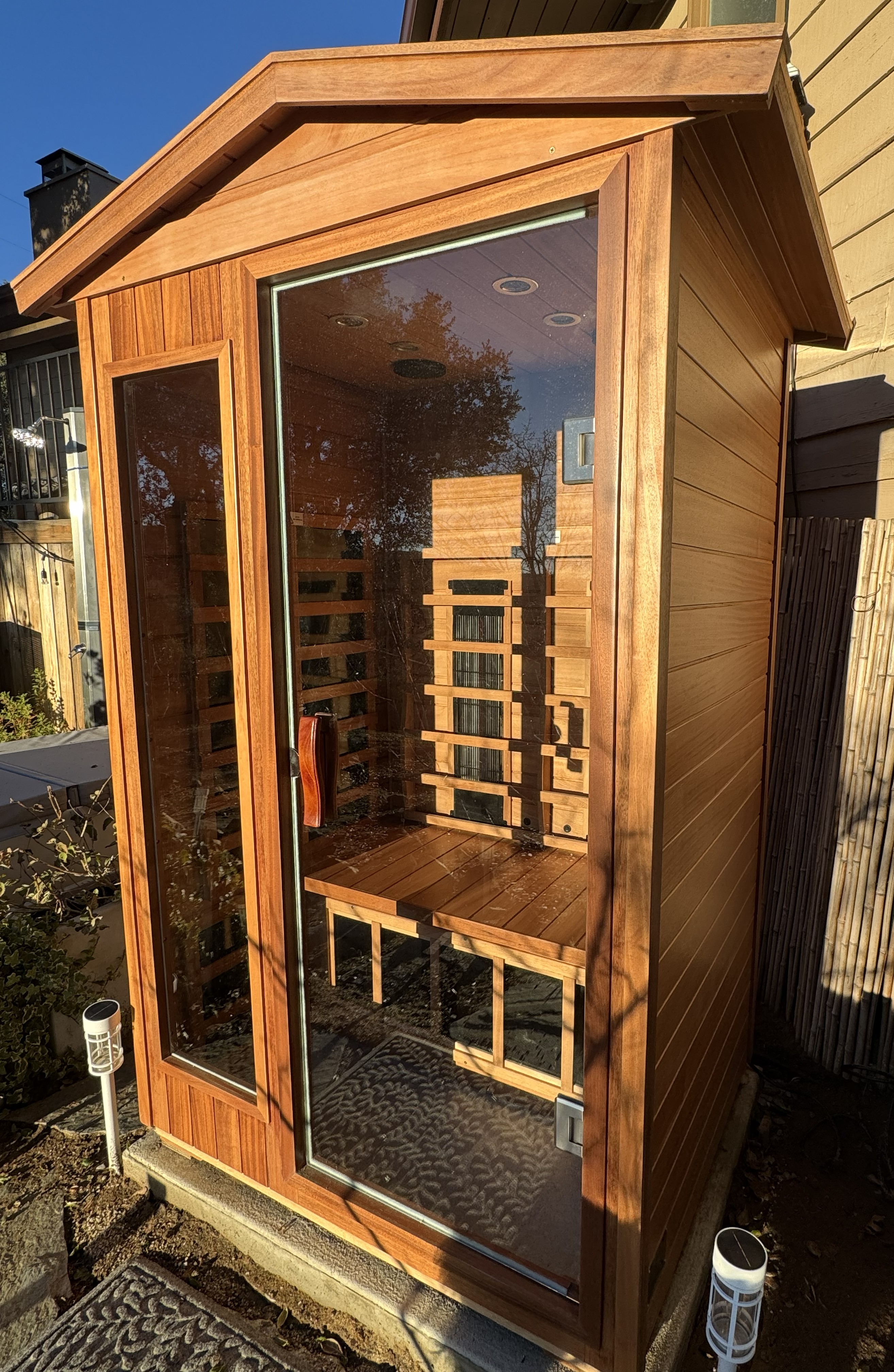
Far-Infrared Sauna
Far-infrared sauna therapy uses infrared wavelengths (primarily in the 5.6–15 micrometer range) to gently heat the body directly rather than heating the surrounding air, as in traditional saunas. This allows for deeper tissue penetration at lower ambient temperatures, typically between 110–140°F. Research suggests that far-infrared exposure promotes vasodilation and increased circulation, supporting cardiovascular conditioning similar to moderate exercise. Clinical studies have demonstrated improvements in endothelial function, reductions in blood pressure, and enhanced heart rate variability, indicating improved autonomic nervous system balance.
Far-infrared sauna use has also been associated with enhanced detoxification through induced sweating, mobilization of certain heavy metals, and reduction of systemic inflammation. Studies report benefits for chronic pain conditions, including fibromyalgia and rheumatoid arthritis, likely due to increased circulation, reduced muscle tension, and modulation of inflammatory pathways. Additional research suggests positive effects on recovery from exercise, improved sleep quality, reduced stress through parasympathetic activation, and potential metabolic support via increased caloric expenditure and improved insulin sensitivity. While ongoing research continues to refine optimal dosing and frequency, current evidence supports far-infrared sauna therapy as a clinically relevant adjunct for cardiovascular health, musculoskeletal recovery, stress reduction, and overall physiologic resilience.
Cold Plunge
Cold plunge therapy, also referred to as cold water immersion (typically 45–59°F), has been extensively studied for its physiological effects on the cardiovascular, musculoskeletal, and nervous systems. Acute exposure to cold triggers peripheral vasoconstriction followed by reactive vasodilation upon rewarming, improving vascular tone and circulation. Research demonstrates that cold immersion can significantly reduce exercise-induced muscle soreness (DOMS), decrease inflammatory markers, and limit tissue edema following intense physical activity. These effects are attributed to reduced metabolic demand, modulation of inflammatory cytokines, and altered nerve conduction velocity.
From a neurophysiological perspective, cold exposure stimulates the sympathetic nervous system, increasing norepinephrine and dopamine levels, which are associated with improved alertness, mood regulation, and cognitive clarity. Repeated cold exposure has been linked to enhanced autonomic resilience, improved stress tolerance, and potential immune system modulation through activation of brown adipose tissue and improved metabolic efficiency. Emerging research also suggests benefits for mental health, including reductions in symptoms of anxiety and depression, likely related to neurochemical shifts and hormetic stress adaptation. When applied appropriately and safely, cold plunge therapy serves as a powerful tool for recovery, metabolic conditioning, nervous system regulation, and overall physiological resilience.
Contrast Therapy - Sauna Followed by Cold Plunge
Using far-infrared sauna therapy followed by cold plunge immersion—often referred to as contrast therapy—creates a powerful physiological stimulus through rapid vasodilation (heat) followed by vasoconstriction (cold). This vascular “pumping” effect enhances circulation, supports lymphatic movement, and may improve endothelial function more dynamically than either modality alone. The alternating thermal stress also amplifies hormetic adaptation, encouraging the body to become more efficient in managing inflammation, oxidative stress, and metabolic demand.
From a nervous system perspective, the sequence promotes both sympathetic activation (cold exposure) and parasympathetic rebound (post-immersion recovery), improving autonomic flexibility and heart rate variability. Clinically, this combination has been associated with enhanced muscle recovery, reduced perceived soreness, improved mood through catecholamine release, and increased mental clarity. When performed safely and intentionally, contrast therapy supports cardiovascular conditioning, immune modulation, stress resilience, and overall physiologic adaptability—making it a strategic tool for both performance optimization and nervous system recalibration.


Michelle Dutro


© Copyright 2026.www.michelledutro.com All rights reserved.