You Are Not Your Job Title: Finding Purpose Beyond Your Career
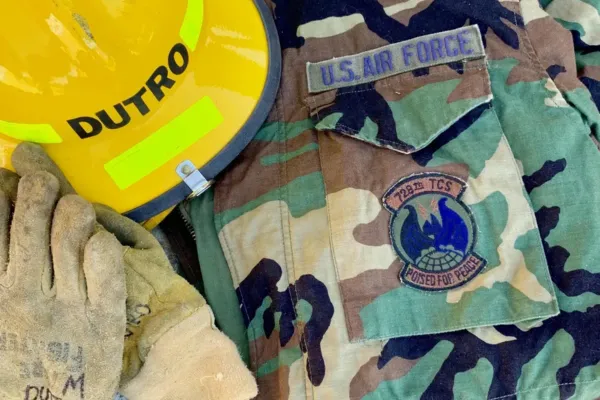
For years, my identity was firefighter.
Not just my job — who I believed myself to be.
It was the title I was proud of. The mission I lived for. The way I understood my place in the world. And honestly, I thought it would be who I was for the rest of my life.
Then came a call involving a seven-year-old boy named Jacob.
My crew and I did everything we could to save him. Every protocol. Every intervention. Every quiet plea. But kneeling beside him that day, something inside me shifted.
For the first time, I began questioning whether my identity was really tied to being a firefighter — or if it was tied to something deeper.
Because what devastated me most was not that I could not perform the job. It was the realization that I no longer wanted my life’s work to begin after tragedy struck.
I did not just want to respond to emergencies.
I wanted to help prevent them.
That realization changed the trajectory of my life.
Not because I stopped caring about helping people, but because I finally understood that the title was never the real purpose. The uniform was simply one expression of it.
And I think this is where many people get lost.
We confuse the role with the reason.
We build identities around careers, titles, achievements, and responsibilities — believing they define who we are. Until one day the role changes. Retirement. Burnout. Divorce. Injury. Loss. Transition.
And suddenly we are left asking a terrifying question:
Who am I without this?
After 25 years of working with veterans, first responders, executives, athletes, and high performers, I have learned something profound:
Most people do not know who they are.
They know what they do.
And those are not the same thing.
What Happens When Your Job Becomes Your Identity?
If your identity is built entirely around a role, what happens when that role disappears?
Research on athletes, veterans, and first responders shows that major life transitions often trigger deep identity disruption. Retirement, career loss, injury, or major life change can create anxiety, depression, isolation, and a profound loss of purpose.
These are not weak people.
They are highly capable, mission-driven individuals who spent years attaching their sense of self to performance, responsibility, and service.
When the role ends, many people realize they never separated who they are from what they do.
Purpose Is Bigger Than a Title
The Blue Zones — regions of the world where people consistently live the longest and healthiest lives — have been studied for decades. Researchers examined diet, movement, community, stress, and lifestyle.
One of the strongest common factors they found was purpose.
In Okinawa, Japan, this concept is called ikigai — your reason for being.
Not your title.
Not your résumé.
Not your income.
Your reason for getting up in the morning.
Research consistently shows that people with a strong sense of purpose experience greater wellbeing, lower stress, better cognitive health, and even longer life expectancy.
Purpose is not just emotional.
It is biological.
Your nervous system knows when you are living in alignment with who you truly are — and it also knows when you are not.
So Who Are You?
Your career may be one expression of your purpose. But it is not your identity.
The deeper question is:
What are you actually here to do in this lifetime?
Because titles end. Roles change. Careers evolve.
But purpose survives all of it.
And if you are in a season of transition right now — retirement, career change, burnout, loss, or simply the quiet feeling that something no longer fits — maybe this is not a breakdown.
Maybe it is an invitation.
An invitation to discover who you are underneath the role.
If this question resonates with you — Who am I when the role ends? — I recently had a powerful conversation with former Army Ranger and COMMIT Foundation CEO JC Glick about identity, transition, purpose, and rebuilding your life after the roles that once defined you disappear.
In the episode, “Who Are You When Everything You Are Is Gone? | Identity, Purpose & Life After Transition,” we discuss why so many people struggle after major life transitions, the difference between transition and transformation, and how purpose survives even when titles and roles do not.
This article is for informational purposes only and is not intended as medical or psychological advice. Always consult a qualified healthcare professional regarding your personal health or mental wellbeing.